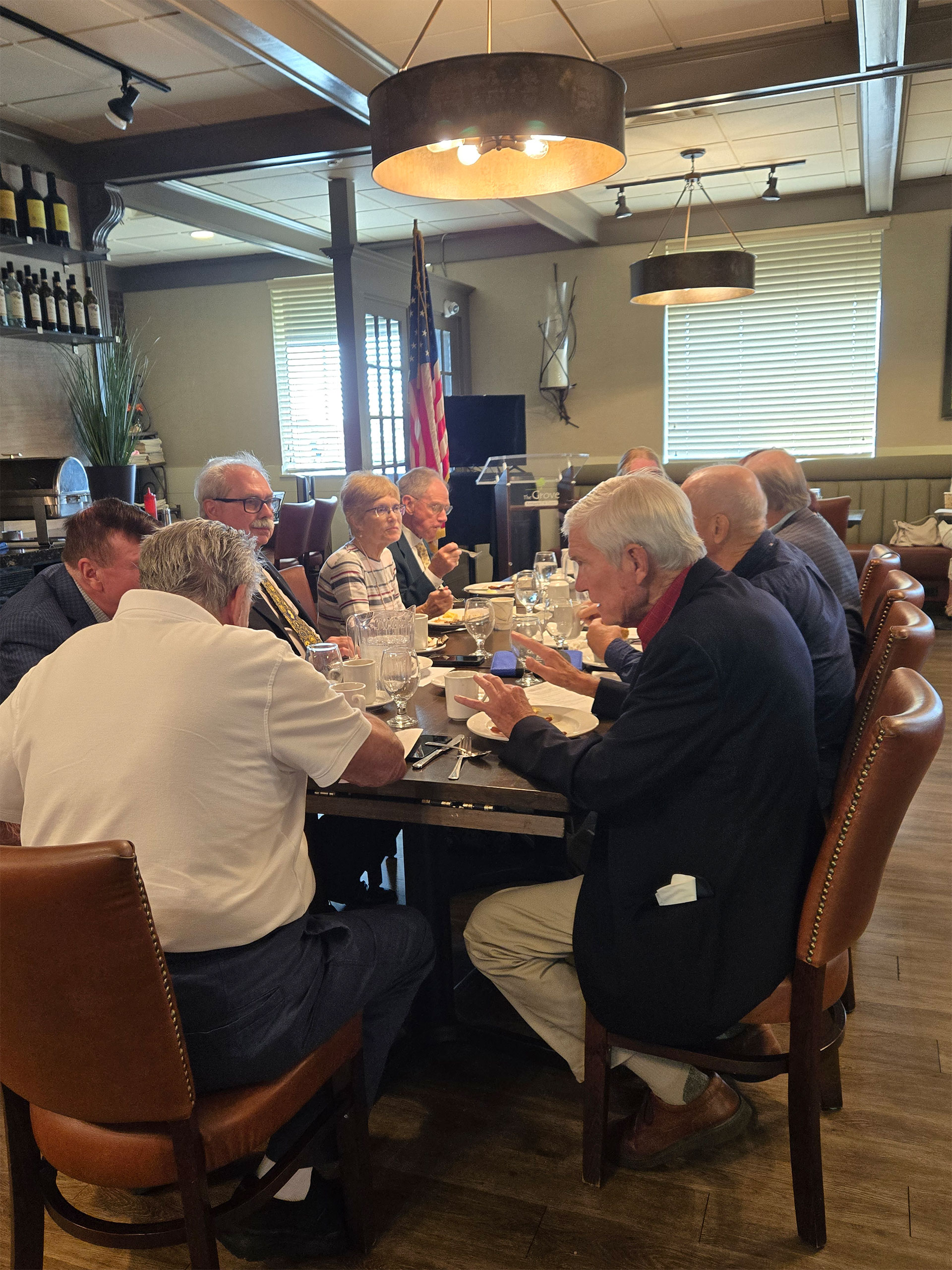

Mayor Curtis welcomed everyone to the meeting.
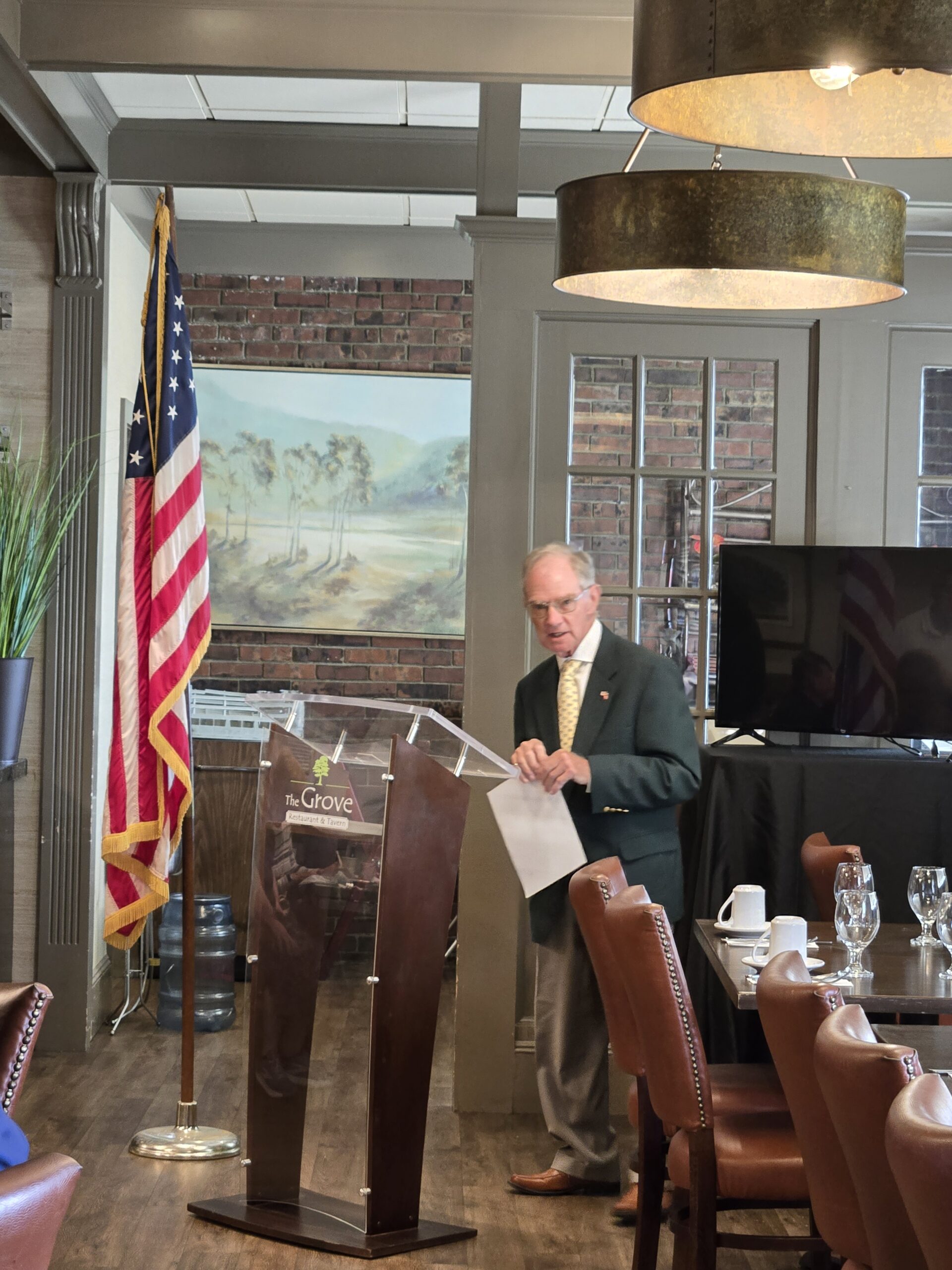
The President then called upon Mayor Emeritus Russ Corby the Honorary Chair of the Scholarship Fundraiser Golf Committee. Mayor Emeritus Corby presented the history of the annual golf classic and recapped the event that was held in August. He thanked all the members and sponsors for their support.
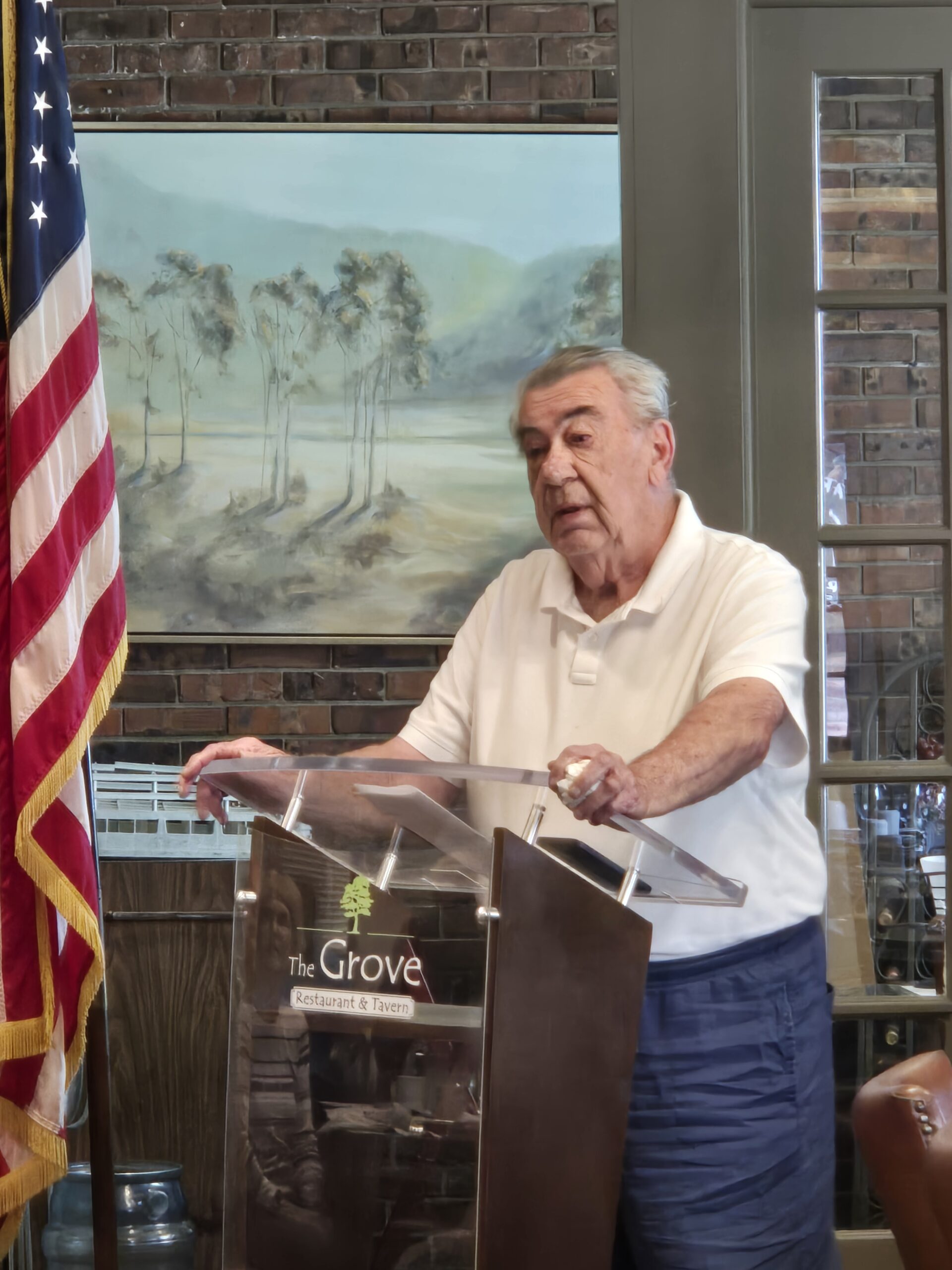
Mayor Curtis then called upon Mayor Emeritus Chris Boyle to present the treasurer’s report.
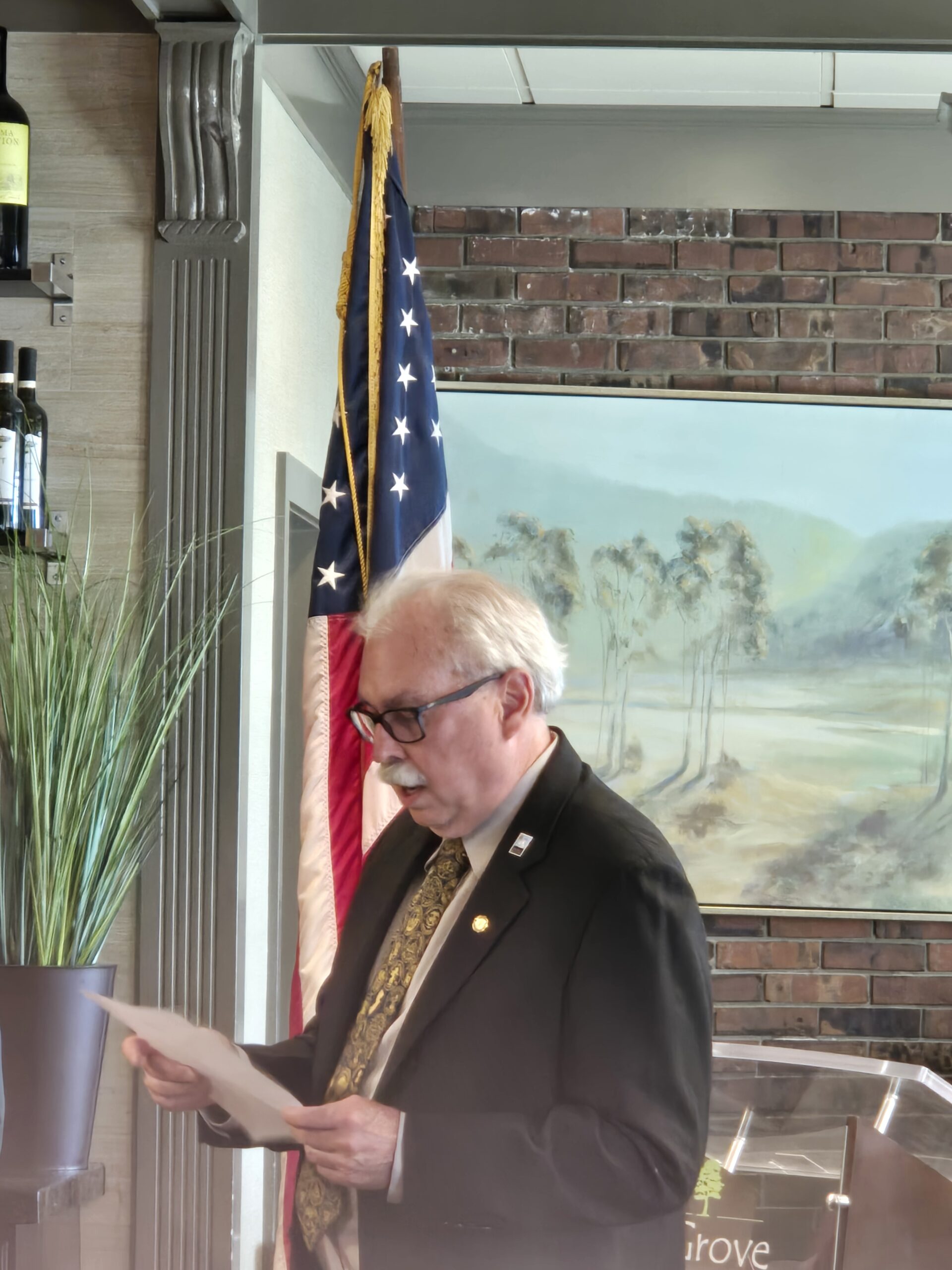
After the treasurer’s report was approved Mayor Curtis requested Mayor Marshall to introduce the guest speaker.

Lori Buckelew

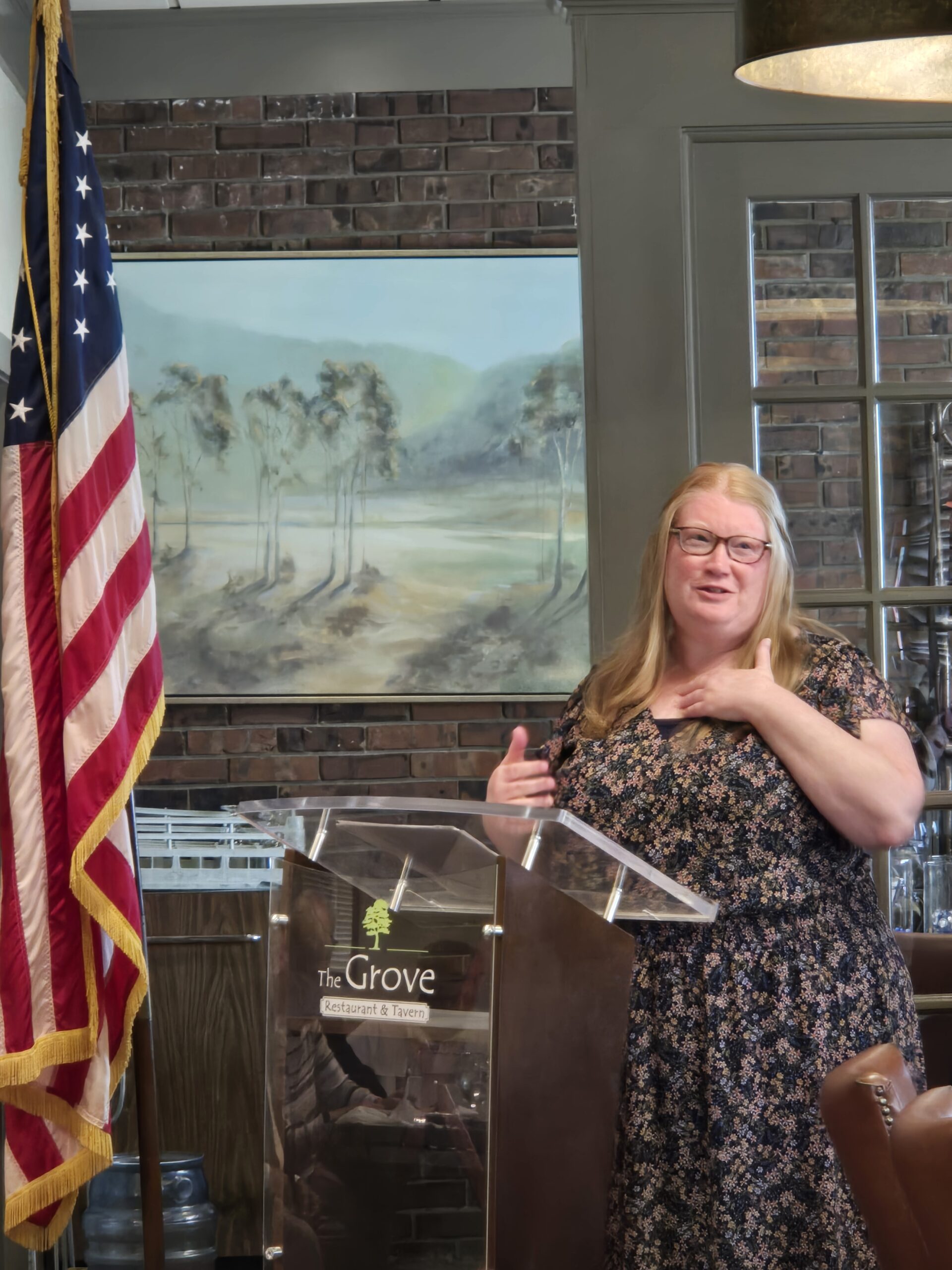
Lori thanked the Association for having her return. She then proceeded with the following presentation.
Affordable Housing
August 31 was the deadline for interested parties to challenge the validity of a municipalities Housing Element and Fair Share Plan. There have been 400 challenges filed – with half of the challenges just seeking additional information. Some of the challenges surround the vacant land adjustment. The next deadline is December 31, 2025, in which municipalities must settle any challenge or provide an explanation as to why it will not make all or some of the requested changes. We have been holding weekly calls with the towns who have had a challenge filed against them.
State Health Benefits
At their September 3 meeting, the State Health Benefits Commission (SHBC) adopted State Health Benefits Plan (SHBP) Year 2026 rate renewal of 36.5% for local plans and 19.7% for state employees. The recommended 36.5% for SHBP Local Governments does not include fully funding the $200 million borrowed to date under c. 66 (law that allowed SHBP to loan funds to SHBP Local Government to meet cash flow), nor bring the Claims Stabilization Reserve up to the required two-month balance.
The Governor and the 17 public sector unions representing state employees announced an agreement to achieve approximately $75 million in recurring health benefits savings for the final six months of SHBP Plan Year 2026. The agreement includes:
- A $110 in-network deductible for individuals and $220 in-network deductible for families for all plans that currently have lower deductibles.
- A $750 out-of-network deductible for individuals and $1,500 out-of-network deductible for families for all plans that currently have lower deductibles.
- A $2,500 out-of-network, out-of-pocket maximum for individuals and $6,000 out-of-network, out-of-pocket maximum for families for all plans that currently have lower out-of-network, out-of-pocket maximums.
- New co-pays on GLP-1, generic, brand, non-preferred brand, and specialty medications across all plans.
- New co-pays on lab visits and imaging across all plans.
- Incentivizing use of in-network ambulatory surgical centers for certain procedures across all plans.
- Limits on out-of-network physical therapy visits across all plans.
- Expansion of the forthcoming Centers of Excellence pilot program for all plans.
While this agreement does not include local governments in the SHBP and represents a short-term remedy, it is our hope that this agreement influences discussions for the SHBP Local Government Employere Group. It is likely that legislation will be required to apply these savings to the Local Employer Group and avoid bargaining with local units.
In July Senate President Scutari released an op-ed on “How we can save New Jersey’s public employee health plan”. In the op-ed he announced a Senate Committee, comprised of the chairs of the various senate committees that would consider any legislative changes to SHBP. Senators Sarlo, Ruiz, Lagana, Vitale and Beach have begun holding stakeholder meetings.
The League has a Health Benefits Task Force, chaired by Hamilton (Mercer) Mayor and NJLM 2nd Vice President Jeff Martin exploring viable options.
Public Notices
On June 30, Governor Murphy signed law (P.L. 2025, c. 72) a bill requiring that all public notices be published on the municipal website starting March 1, 2026. In addition, from January 1, 2026 to December 31, 2026 the municipal clerk must publish a notice with a link to website wo both the municipal public notice webpage and the Secretary of State webpage required by the law. This notice must be published twice a month. If the Secretary of State’s website is not public the notice still must be published with just the municipal link. After December 31, 2026 public notices will just need to publish on the municipal website. Nothing in the law precludes a municipality to continue to public notices in a print newspaper, if they choose. However, they must publish on their municipal website. For more information please see the League’s July 15 Lunch & Learn session on the new public notice law.
Real Rules
On July 21 New Jersey Department of Environmental Protection (DEP) published Notice of Proposed Substantial Changes to their Resilient Environments and Landscapes (REAL) rule proposal. The REAL rule proposal amends existing flood hazard, stormwater, coastal zone and freshwater regulations statewide. As way of background, the “New Jersey’s Rising Seas and Changing Coastal Storms: Report of the 2019 Science and Technical Advisory Panel” report by Rutgers University factor into the crafting of the rules.
The July changes included:
- Reduction rising above sea level from 5 feet to 4 feet. This change includes the tidal climate adjusted flood elevation, extent of flood hazard area jurisdiction, and Inundation Risk Zone
- Re-evaluating sea-level rise & precipitation data incorporated into these chapters every 5 years, will amend accordingly
- Providing “legacy provisions” for projects that are already in development prior to the adoption of REAL amendments.
- Clarifying that projects need to be “allowable within” an existing right-of-way or easement rather as originally proposed “permitted condition of.”
- Proposing to exempt the installation, replacement, or repair of underground utility lines constructed within a previously recorded easement from deed notice requirements. Additionally, an exemption will be extended to repairs and maintenance activities that may alter the height of a building.
- Changing the list of regulated waters that do not possess a riparian zone to delete two existing exemptions that are proposed for deletion in the Flood Hazard Area Control Act rules (FHACA) but not in the Coastal Zone Management rules (CZM).
- Changing provisions to clarify burial depth for 2.0 meters for submerged transmission cables are required in certain areas, that depth be measured by top cables and that depth is no shallower than 1.2 meters.
- Changing of “man-made” to “human-made” and is allowing for temporary impacts to human-made wetlands in and around stormwater basins in certain situations and allows for thin layer placement on site for mosquito control purposes in certain instances if it doesn’t impede the character of the wetlands or impair water quality.
- Proposing changes to include the removal of the term “or reconstruction” of any motor vehicle or other impervious surface, not just “regulated” surfaces as a “major development” and require 80% total suspended solid removal for stormwater runoff. DEP notes the amendment is consistent between the developments subject to the State’s review pursuant to Stormwater Management rules, but also to developments subject to municipal review pursuant to local stormwater ordinances.
- Exempting certain isolated water that has no surface or subsurface hydrological connection to regulated waters.
- Clarifying the placement of underground jacking or regulated water or 25 feet of a top of a bank.
- Changing the requirements for permits-by-registration, permits-by-certification, and general permits for fencing to be consistent with the Uniform Construction Code (UCC).
- Clarifying the proposed requirement for “dry access.”
- Correcting standards for evaluating the feasibility and location of proposed building sites and clarifies that areas subject to fluvial flooring may or may not be subject to tidal flooding.
- Clarifying that portions of existing buildings are being converted to another use must meet the requirements applicable for the proposed use.
- Clarifying that dry flood proofing is prohibited only in flood hazard areas in which the flood velocity is greater than five feet per second, Costal A zone and the V and VE zones.
- Specifying that a compelling public need meriting a hardship exception including the need to provide affordable housing.
The League submitted comments on Sept 19. The League comments stated that the proposed rules unnecessarily exceed local and existing FEMA standards, and the scope and impact of this proposal cannot be understated. At 1,044 pages this is the longest rule the NJDEP has ever proposed. The proposal makes significant modifications to multiple sets of regulations outside of the legislative process or with explicit authority from the legislature. It is more appropriate to achieve these changes through the process of legislation and through a balanced gradual approach. If adopted these rules will have an impact on development and redevelopment in many areas within the state. The PACT REAL rules as proposed will cause economic hardship for local governments and homeowners. The proposed rules will also negatively impact the state’s affordable housing status.
Resources: NJ DEP REAL webpage.
3M Settlement
On September 2, the New Jersey Department of Environmental Protection’s (DEP) published a Notice to Receive Interested Party Comments. DEP is attempting to enter a settlement with 3M Company (3M) and Dupont over the use of forever chemicals (PFAS) that would preempt municipalities from taking legal action on their own against these companies. Our members and affiliate organizations have expressed strong opposition to this settlement.
We oppose the proposed settlement and have requested that the proposed Judicial Consent Order (JCO) be vacated and the settlement terms between the State and 3M Company be reconsidered. The proposed JCO reflecting the DEP’s settlement with 3M should be vacated because it is not in the public’s interest.
The settlement precludes municipalities (and other interested parties) from exercising their rights to bring existing and future claims against the company in connection with this matter. Local governments were not included in settlement negotiations despite their obvious interests in the matter.
If they were provided with the opportunity to opine on these discussions, they would have had the necessary time to assess the impacts and would be better positioned to guard their rights and protect their residents against future economic harm as a result of the contamination.
Best Practices Checklist
The Division of Local Government Services issued Local Finance Notice 2025-13 updating the Best Practices Inventory. The 2025 Best Practices Inventory must be submitted by October 24, 2025.
There are a total of 70 questions on the Best Practices Inventory, with six new scored questions and nine unscored questions. Each municipality must receive a minimum score of 32 to receive its full final aid payment. Based on the best practices inventory results, DLGS will decide if a portion of a municipality’s final formula aid payment will be withheld based on the following scoring criteria:
- 32 and greater: 100% payment, with no aid withheld.
- 28-31: 75% payment, 25% of final aid withheld.
- 24-27: 50% payment, 50% of final aid withheld.
- 0-23: No aid payment, 100% withheld.
- Failure to submit the Best Practices Inventory will be considered a zero score.
A municipality may appeal its score, but not before submitting the Best Practices Inventory. The deadline for appeals is Friday, October 24, 2025, and must be submitted via email to [email protected] with the heading of “Best Practices Appeal.” Municipalities seeking to appeal should submit their appeal in conjunction with the Best Practices Inventory.
Please see DLGS Best Practice Inventory Instructions and the FAQ for more details concerning directions, login, and access information. If technical assistance is required, please email [email protected]. For questions regarding the best practices inventory, please email [email protected].
Federal Issues
Federal Budget: The Federal Budget expires on September 30. Unless there are negotiations, it appears we are heading toward a federal government shutdown. Last week, the House voted 217-212 in favor of the Continuing Appropriations and Extensions Act of 2026, which extends government funding at current levels through November 21. The Senate, which requires 60 votes, rejected the legislation by a vote of 44-48. Both chambers will not reconvene until next week, just before funding expires.
National Flood Insurance Program (NFIP): The National Flood Insurance Program is set to expire at the end of this month. It is likely that a continuing resolution to fund the government will include another short-term extension of the NFIP (of which there have close to 40 in the last decade. During a lapse NFIP cannot sell new or renew flood insurance policies after 11:59 pm Eastern time on September 30, 2025; existing NFIP policies will remain in effect until their expiration date, and claims will continue to be paid as long as FEMA has the funds on hand; and renewal policies are generally issued if the application and premium are received prior to a lapse. Other renewals and policies expiring after a lapse must wait for reauthorization. The League has long advocated for a long-term reauthorization of the NFIP, passing conference resolutions and routinely speaking to our congressional representatives about it.
Lame Duck
This is the time period between election day and the new legislative term (January 13, 2026). The entire Assembly is up for election and there will be a new Governor.
We anticipate seeing legislation addressing health benefits, preempting local land use, and possible changes to the Energy Tax Receipts.
In regards to preempting local use decisions, we may see movement on the following bills:
Stranded assets: S-1408, as amended, authorizes conversion of certain office parks and retail centers to mix use development as permitted use. Municipal planning boards would be required to permit conversions or partial conversions of eligible properties into mixed use developments.
Eligible properties include office parks that are at least 50,000 square feet; retail space of at least 15,000 square feet and vacancy rate of 25% for the last 18 months or has suffered an economic downturn over the immediate preceding 3 years.
A mixed-use development, which may include the demolition of existing structures, that is subject to a preemptive conversion shall be considered a permitted use and not require a variance, subject to several criteria including the development otherwise complies with zoning requirements in the municipality’s mixed-use zone. The application proposes at least two types of uses, one of which shall be residential, and no use shall be industrial, and at least 20% of the residential units to be constructed shall be reserved as very-low-income housing, low-income housing, or moderate-income housing.
If the municipality’ s zoning ordinance does not include a mixed-use zone, a mixed-use development that meets the requirements of the bill will be subject to the following requirements: the he height limitation of the mixed-use development shall be the greater of the height of the tallest existing building at the eligible property and the most permissive building height allowed by the municipal zoning ordinance within the zoning district in which the eligible property is located; the setback limitations applicable to the mixed-used development shall be the lesser of the setbacks of the existing buildings on the eligible property and the least restrictive setback limitations allowed by the municipal zoning ordinance within the zoning district in which the eligible property is located; and the maximum impervious coverage for the mixed-use development shall not be less than the greater of 125% of the existing impervious coverage on the eligible property, or the maximum impervious coverage allowed by municipal ordinance within the zoning district in which the eligible property is located.
The bill is at second reading in the Senate. The Assembly companion A-2757 awaits consideration by the Assembly Commerce, Economic Development, and Agriculture Committee.
The League opposes the bill and is working with the sponsors to address our issues. Much thought, expense, and effort goes into municipal planning and the resulting zoning regulations. The determination to zone an area as commercial or residential is done after careful consideration for the health, safety, and welfare of the community. Allowing, as of right, a property zoned strictly commercial to convert to mixed-use undermines the careful and thoughtful zoning practices of local governments. It is through the variance procedures provided for within the Municipal Land Use Law that an appropriate review of any deviation from the zoning requirements is made. This important procedure should not be preempted. Further, municipal leaders are intimately aware of their zoning as well as the trends in development towards a more centralized, walkable living environment. With this is mind many municipalities have already begun to reexamine their zoning to accommodate these developments from a more holistic approach, taking into consideration all aspects of zoning and their masterplans. It is unnecessary to adopt legislation that makes a wholesale change to all municipalities throughout the state.
Accessory Dwelling Units (ADU): Earlier this year, the Assembly Housing Committee considered three bills that would preempt local planning and permit the development of Accessory Dwelling Units (ADUs) on property zoned for single or two-family residential uses. The committee merged the three bills into ACS for A-2792, A-4370, and A-2489; however, they did not advance the legislation. The Senate companion bill, SCS for S-2347 and S-1106 was reported out of Senate Community and Urban Affairs Committee on February 15. It was amended and substituted on the Senate floor February 25. The SCS for S-2347 and S-1106 awaits consideration by the full Senate.
The legislation would prohibit municipalities from restricting the development of ADUs and establish the criteria for such development. ADUs will be permitted as a right if the ADU is used or intended to be used by the property owner, family members, or non-paying guests.
Within 90 days of the bill’s enactment municipalities would be required to adopt an ordinance incorporating the provisions of the bill. The ordinance must provide that:
- An ADU may only be developed on a lot upon which a single-family dwelling or two-family dwelling is a permitted use, unless the applicable municipal zoning ordinance permits development of an accessory dwelling unit at other locations.
- An ADU must contain at least 300 square feet of complete independent living facilities per unit.
- The height of a proposed ADU must not exceed the height of the primary dwelling.
- An ADU shall not be located closer than five feet from the lot line.
- An ADU may provide direct exterior access that is separate from the direct exterior access for the primary dwelling.
- Additional off-street parking for an ADU shall not be required; and
- The installation of fire sprinklers shall not be required in an ADU that is within, or an extension to, a preexisting primary dwelling that is not required to install fire sprinklers.
A municipal land use ordinance may include one or more of the following provisions:
- Reasonable landscaping standards for detached accessory dwelling units.
- Architectural review requirements for an application for development of an ADU within an area designated as a historic district, if the development requires either new construction or exterior modification of an existing structure.
- An ADU shall not be rented for a period of less than 30 days and may include penalties that may be imposed upon the owner of an ADU that violates this paragraph.
- An ADU is a permitted use in addition to those types of zoning districts identified in the bill; or
- The maximum size of an ADU that is constructed separately from a primary dwelling shall be limited to square footage that is not in excess of 60% of the lot’s buildable area.
The bill also requires municipalities to certify to the Department of Community Affairs within 60 days of the adoption of the municipal ordinance. A municipality that fails to comply may be subject to penalties or other actions deemed appropriate by the Department of Community Affairs.
The bill does permit a municipality to deny an ADU application if the proposed site is located within an area with insufficient public sewer or water service or with severe constraints on the use of wells or septic tanks to render the addition of the ADU hazardous to public health. Denial is also allowed when the site location cannot accommodate a 300-square-foot structure without violating the minimum side-yard or rear-yard setback of five feet from the lot line.
A municipality will have 60 days from the submission of a completed application to make a written decision on the application. Otherwise, the application is considered deemed approved, unless the applicant agrees to an extension. If the application is denied, the written decision must include a detailed explanation of the denial and provide recommendations to correct any deficiencies. Please note if the application is for a single family or two-family with an ADU, upon the applicant’s request, the municipality can act upon both applications within the timeframe the governs single family or two-family applications. However, a municipality cannot impose any conditions or requirements on the ADU beyond those provided in the bill.
In regard to utility connections for an ADU created within an existing or extension of a primary dwelling, a municipality cannot require the installation of a new or separate utility connection between the ADU and the utility or impose a related connection fee or capacity charge, unless the ADU is constructed together with a new single-family dwelling. If the ADU is created as a separate structure not part of the existing primary dwelling, the municipality can require the installation of a new or separate utility connection between the ADU and utility. The connection can be subject to a connection fee or capacity charge that cannot be more than half the fee charged for a new primary dwelling and cannot exceed the reasonable cost of providing the service.
The League opposes this legislation as it undermines municipal land use planning that carefully considers availability of water, sewer capacity, parking, and infrastructure needs of the community. Municipalities already have the authority to permit ADUs, but to mandate the allowance of ADUs in all municipalities removes local control to shape policies that meet the needs of their community.
Sample resolution opposing the legislation
Moving Housing plan out of Fair Housing Act into Municipal Master Plan: S-4451 modifies requirements for land use plan element and housing plan element of municipal master plan. The bill requires a municipal master plan to include a housing plan element and specifies that the housing plan element is to evaluate the need for, and establish a plan for, the provision of housing in the municipality, which is to include affordable housing.
The municipality’s land use plan element will be required to describe the land use plan element’s relationship to, and how it is designed to effectuate, the housing plan element and show adopted redevelopment plans for areas designated in need of redevelopment or rehabilitation under the “Local Redevelopment and Housing Law”.
The bill passed the Senate 23-14. The Assembly companion, A-5667, awaits consideration by the Assembly Housing Committee.
The League opposes the bill as it requires municipalities to completely reassess and revamp their master plans to accommodate the new housing requirements. It will require the expenditure of significant resources to have the appropriate professionals go out into the municipalities to assess the current plans and changes that will need to be made, as well as to create further plans regarding, for example, transportation and access.
The League raised several concerns with the sponsor, principally because the legislation makes the housing element a mandatory element, and the bill is effective immediately. The implication is that every current master plan could be deemed non-compliant with the statute, forcing the immediate revision of hundreds of master plans
Reduction in the Required Number of Parking Spaces in Statewide site improvement standards at residential developments: S-2974 restricts a municipality’s ability to make land use decisions that best suit its community and that are reflected in their Master Plan. By mandating specific zoning obligations without local input, it would undermine local officials’ ability to properly manage land use in their municipality. Without local review, planning and decision-making authority, local officials are unable to be as effective to their respective communities.
Assumes that reduced parking is appropriate for all projects based on their proximity to public transportation. While this may be true in some instances, it may not be true in others.
The League opposes the bill, as decisions on minimum parking for projects are best made on a case-by-case basis and should be made by local officials with an understanding of specific needs of the community. Under current law, a developer can already obtain relief from minimum parking standards.
Eliminating minimum parking requirements may be suitable for some areas, but in others could cause congestion and parking shortages. Limited parking availability increases “cruising” or the amount of time drivers spend looking for parking.
Under current law, a developer can obtain relief from the standards from a reviewing board on a case-by-case basis, but such relief is subject to the scrutiny of local officials. This relief done at a local level allows for individual projects to be reviewed and relief to be granted when appropriate. This type of review maintains the original legislative intent and function of the site improvement standards.
The SCS for S-2974 was favorably reported from the Senate Community and Urban Affairs Committee in March. The Assembly companion, A-3043, awaits consideration by the Assembly State and Local Government Committee.
In regards to Energy Tax Receipts Property Tax Relief and Consolidated Municipal Property Tax Relief Aid Program: S-4691/A-5787 , which was introduced at the end of June and has yet to have a hearing in either chamber, repeals sections of law providing for the distribution Energy Tax Receipts Property Tax Relief and Consolidated Municipal Property Tax Relief Aid, and replaces the Energy Tax Receipts Property Tax Relief Aid program with a new initiative, the Municipal Property Tax Relief Program.
It requires State revenues currently deposited into the Energy Tax Relief Property Tax Relief Fund to be deposited into the Municipal Property Tax Relief Fund and dedicates those revenues to support State aid payments to municipalities under the new program.
If it were to be enacted for State fiscal year 2026, the amount credited to the “Municipal Property Tax Relief Fund” is to be $1,455 billion multiplied by the sum of 1.0 and the index rate or zero, whichever is greater. For State fiscal year 2027 and for each fiscal year thereafter, the amount credited to the “Municipal Property Tax Relief Fund” would be equal to the amount credited to the fund in the prior fiscal year, multiplied by the sum of 1.0 and the index rate or zero, whichever is greater. Under the bill, no municipality would receive less than the amount received in Energy Tax Receipts Property Tax Relief Aid in calendar year 2024, or State fiscal year 2025 for a municipality that utilizes a State fiscal year budget cycle. State aid provided to municipalities in excess of the $1,455 billion would be distributed pursuant to a formula developed by the Commissioner of Community Affairs, as specified in the bill.
Similar to the Energy Tax Receipts Property Tax Relief Act, the bill includes a provision providing that if the State does not make the appropriations and distributions required under the bill, the State would forgo the collection of certain corporation business tax revenues from all corporate taxpayers that are not public utilities for that tax year.
Amounts distributed to municipalities from the “Municipal Property Tax Relief Aid Fund” in excess of the amount distributed to the municipality from the “Energy Tax Receipts Property Tax Relief Fund” during the State fiscal year 2002 is to be used for the purpose of reducing the amount the municipality is required to raise by local property tax levy for municipal purposes.
Under the bill, in any year that certain net payments from specified sources to the State exceed $1.425 billion, 75 percent of the amount in excess of $1.425 billion would be required to be credited to the “Municipal Property Tax Relief Aid Fund” and distributed to municipalities as additional aid. If passed by both chambers and signed by the Governor, this legislation would take effect during the next state fiscal year.
Business Personal Property Tax: The Business Personal Property Tax (BPPT) was enacted in 1997 as New Jersey’s response to laws enacted at the federal level. While telephone exchanges operating 51% or greater within a municipality is required to pay BPPT to the municipality, the definition of how these calculations should be made has been challenged, and has resulted in expensive court fees for Hopewell Borough.Absent legislation to clarify this tax, every municipality faces the prospect of costly annual tax court filings, similar to Hopewell as seen in the Verizon v. Hopewell case. Currently, there is a minimum of 127 other municipalities in the position of Hopewell Borough, and well over 60 pending trials. The New Jersey Supreme Court affirmed an Appellate Division decision and Hopewell was successful, municipalities still settling individually for each tax year.
The League supports S-1535, of which there is currently no Assembly companion. This bill will restore the local property tax status quo intended to be determined in 1997 by revising the definition of “local exchange telephone company” to mean a telecommunications carrier which held the regional monopoly on landline service before the market was opened to competitive local exchange carriers by the federal Telecommunications Act of 1996, or the corporate successors of such a local exchange telephone company.
This will accomplish two important purposes: first, it will require that the dominant telecommunications carrier in each region pay the business personal property tax on its business personal property regardless of the percentage of a local telephone exchange that it serves, and will permanently enshrine that business personal property into the tax base of the municipalities in which it is located.
The bill would also require that if a municipality is the prevailing party in a court proceeding between it and a local exchange telephone company concerning the taxation of business personal property pursuant to R.S.54:4-1 following a court decision, settlement, or other resolution of that proceeding, the municipality, and any related amicus entities, shall be awarded attorney’s fees as costs to the local exchange telephone company.
The League is strongly advocating for passage of this legislation to provide certainty to municipalities and avoids costly legal expenses.